
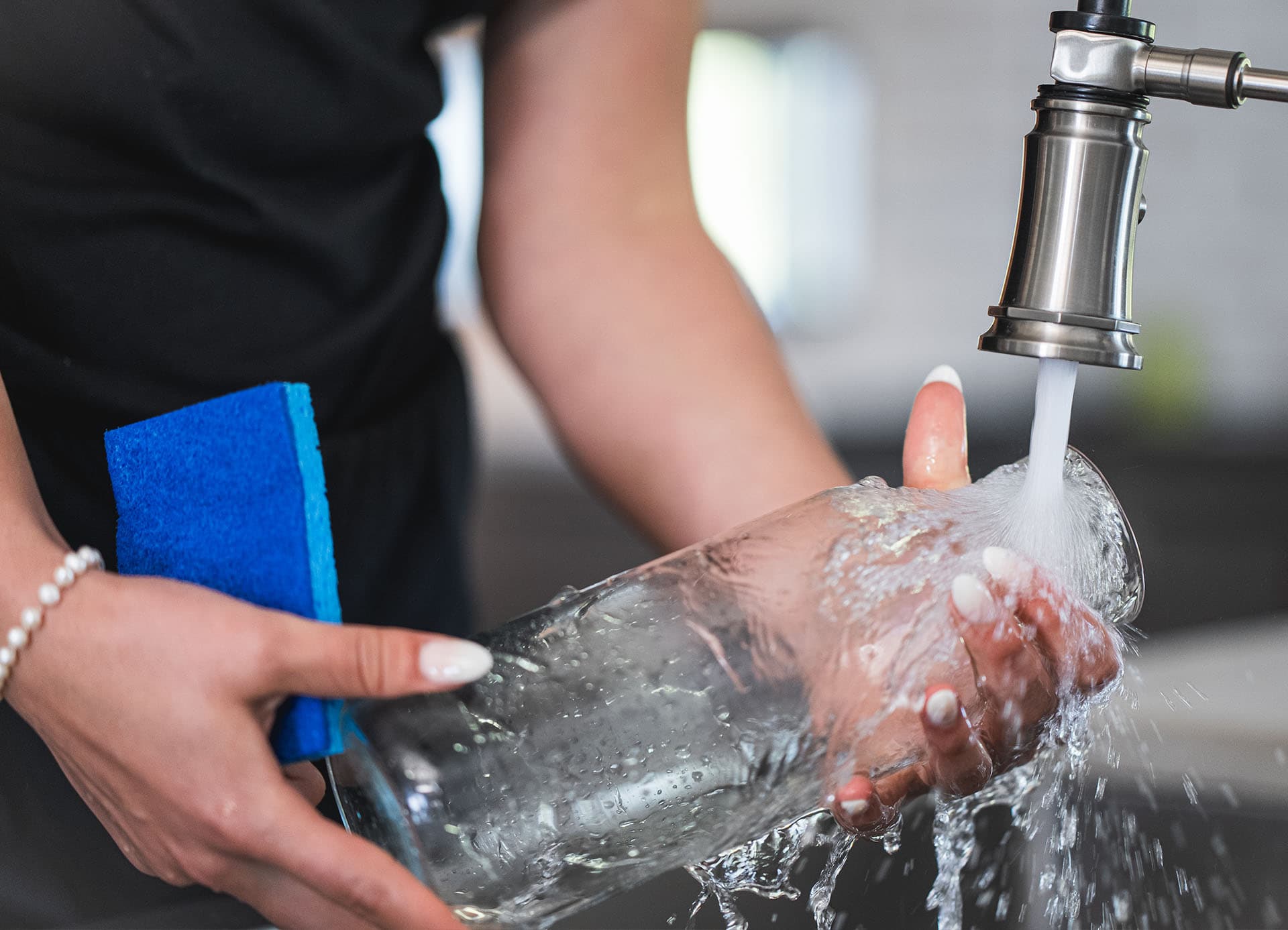
Free in-home water test
What's in your water?
Hard water, iron, chlorine, and in older homes, lead. Find out what's coming out of your tap, and what it takes to fix it, with a free test at your kitchen sink.
- Family-owned in Minnesota since 1961
- No cost, no obligation
- 8 local stores, MN & WI
Signs your water needs a look
Rusty or orange stains
Usually iron. It stains sinks, tubs, and laundry.
White scale, spotty dishes
Hard water. It builds up in pipes and water heaters too.
A taste or smell
Chlorine in city water, or a rotten-egg smell from a well.
An older home
Pipes, solder, and fixtures can add lead. You can't see, taste, or smell it.
None of these? A test still tells you what you can't see. Schedule it
What we find most often
Every home's water is different. City water is treated at the plant, then travels through miles of pipe and your home's own plumbing before it reaches the tap. Well water comes straight from the ground. These are the four things we see most, what you'd notice, and what fixes each one.
Hard water
What you notice
White crust on faucets, spotty dishes, dry skin, a water heater working harder than it should.
The fix
A water softener.
Iron
What you notice
Orange or rust-colored stains in sinks, toilets, tubs, and laundry.
The fix
A softener or an iron filter, depending on how much there is.
Chlorine, taste, and odor
What you notice
City water that tastes like a pool, or well water that smells like rotten eggs.
The fix
Carbon filtration, or a well system built for what's in it.
Lead
What you notice
Nothing. Lead has no color, taste, or smell. Homes built before 1986 are more likely to have lead solder, pipes, or fixtures.
The fix
Reverse osmosis at the kitchen tap, or a filter certified for lead reduction. Our in-home test doesn't measure lead; for a certified number, we'll point you to an accredited lab.
Older home? Four habits that cut lead exposure
Flush before you drink
If a tap hasn't run in six hours, let cold water run at least a minute before you drink it.
Cold water only
Use cold water for drinking, cooking, and baby formula. Hot water pulls more lead out of pipes than cold.
Protect the little ones first
There is no safe level of lead. Babies, kids under six, and pregnant women are at the highest risk.
Filter at the tap
Boiling does nothing for lead. A filter certified to NSF/ANSI 53 or 58 for lead reduction does. Softeners don't count.
Guidance from the Minnesota Department of Health and the EPA. Sources: Lead in Drinking Water, MDH, Lead in Drinking Water, EPA.
Free in-home water test
Know what's in your water before you spend a dollar on it
A Finken water specialist comes to your home and leaves you knowing what's in your water and what to do about it. No cost, no obligation, no pressure.
- 1
We test at your kitchen tap
Hardness, iron, pH, chlorine, and the other things that decide the right fix. If you want a lab-certified lead number, we'll point you to an accredited lab.
- 2
We explain what we found
In plain language, with your numbers in front of you.
- 3
You see the options and the prices
From a drinking-water system under the sink to a softener or whole-house filtration. Nothing gets installed until you say so.
Schedule your free water test
Takes about a minute. We call you back within one business day.
Water treatment
The right fix depends on what's in the water
That's why we test first. Most homes need one of these, and some need two.
For the whole house: a softener
Takes out hardness and, in most homes, iron. Fixtures, dishes, laundry, and your water heater all last longer.
At the kitchen tap: reverse osmosis
A system under the sink feeds a dedicated faucet for drinking, cooking, coffee, and formula. It is the standard answer for lead in drinking water. Look for NSF/ANSI 58 certification for lead reduction.
Every tap: whole-house filtration
Installed where the water enters the house, so showers, bathroom sinks, and the ice maker are covered too. The PIONEER filter is certified to NSF/ANSI 53 for lead and also handles PFAS, chlorine, and cysts.

Whole-house filtration
PIONEER™ Lead, PFAS & Chemical Filter
- Certified to NSF/ANSI Standard 53 for lead, cyst, and material safety
- Removes lead, PFAS, chlorine, and cysts at the point of entry
- 100,000 gallons or one year per filter
Reverse osmosis drinking water systems

PureChoice Central Reverse Osmosis
Multiple Locations with Clean Purified Water. Sinks, Wet Bars, Humidifiers

PureChoice 435 Reverse Osmosis
High Output Purified Water with Long-Term Affordability (Most Popular)

Max Flow
Low Priced Purified Water At The Tap

PC-4 Reverse Osmosis
Reliable and Affordable system for Smaller Households
Water Test Questions
What does the free water test check?
Hardness, iron, pH, chlorine, and the other things that decide which treatment fits your home. If you want a lab-certified number for lead, we'll point you to an accredited lab.
My water comes from the city. Do I still need a test?
City water is treated before it leaves the plant, but it can still be hard, taste of chlorine, or pick up metals from the pipes and fixtures in your home. A test shows what is actually coming out of your tap.
Does my water softener remove lead?
No. A softener treats hardness, not lead. You need a reverse osmosis system or a filter certified to NSF/ANSI 53 or 58 for lead reduction. Many homes run both: the softener for the house, the filter for the drinking tap.
Does boiling water remove lead?
No. Boiling kills germs but leaves lead behind, and as the water boils off the lead gets more concentrated. Filter it instead.
What does the free water test cost, and is there a catch?
Nothing, and no. A Finken specialist tests your water at the kitchen tap, explains what we found, and shows you options with prices. You decide what, if anything, to do next.
Find out what's in your water
A free test at your kitchen tap. No cost, no obligation, and the options with prices before anything happens.
Worried about PFAS? See how we treat it